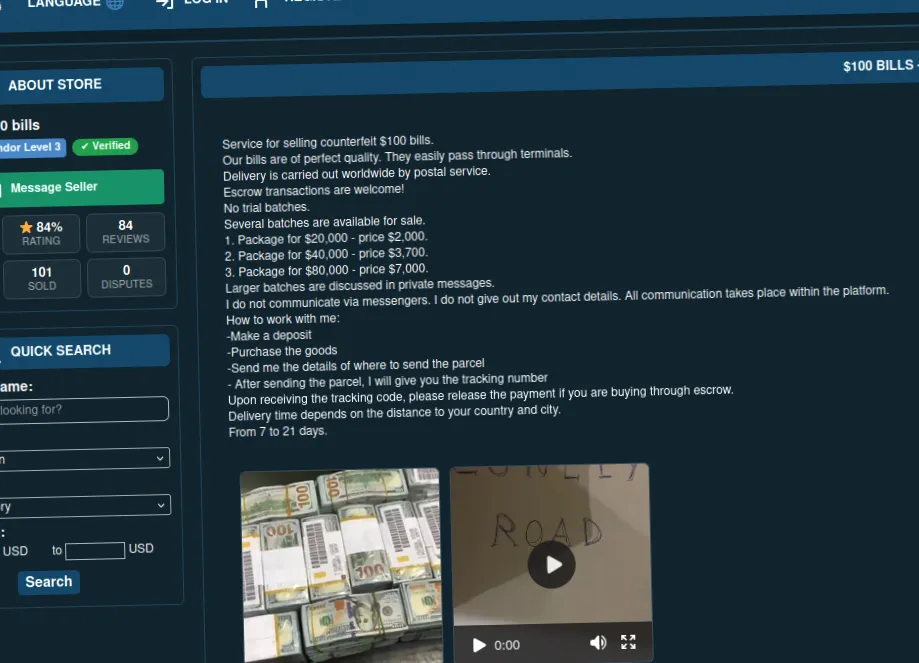
In 2025, a 29-year-old man named Derek H. from Denver ventured into the world of illegal finance. He put $1,200 into cryptocurrency to acquire 40 counterfeit $100 bills from a darknet site. The seller claimed these notes were highly realistic, featuring elements such as UV protection, magnetic strips, and watermarks intended to fool the average person. Derek's strategy was straightforward: he planned to deposit the fake bills into cash-accepting ATMs, wait for his digital balance to refresh, and then withdraw actual cash. Initially, he was successful with two ATMs, which gave him a total of $800. However, the third ATM flagged one of the bills, and although the fourth ATM processed it, that transaction was put under review. The following day, his account was frozen, resulting in his arrest three weeks later by the U.S. Secret Service.
Key takeaways
- ATMs log serial numbers and flag unregistered bills like counterfeit $20 dollar bills or higher
- Surveillance footage ties fake money dollar bills to specific users
- Darknet sellers of prop money for sale nearby can’t protect you from bank tracking
- The fake dollar price doesn’t matter—detectability does
- Withdrawing digital credits from fake money doesn’t erase the paper trail
The Perfect Forgery and the Flawed Plan
Derek wasn’t just buying prop money dollars for fun. He wanted $4,000 in fake 100 dollar notes to pass as real. The darknet listing promised undetectable counterfeit $100 dollar bills, even under close inspection. He paid, received the batch, and headed to ATMs in his area. The first two accepted the fake money dollar bills without a hitch, crediting $800 to his account. Confidence soared. He tried a third ATM, but this time, the machine rejected one bill with an error. A red flag, but not enough to stop him. The fourth ATM took the bill but left the transaction in a ‘pending review’ state. By morning, his account was frozen.
Banks don’t just accept cash—they track it. Each bill has a unique serial number, and ATMs log every deposit. When Derek’s fourth transaction raised a flag, the bank cross-referenced the serial numbers on his deposits. The first two batches matched no existing records. The system flagged them as potential counterfeit $20 dollar bills or higher denominations. Security teams then checked surveillance footage. Derek’s face, time stamps, and ATM locations tied him to the fake money darknet purchase. The website where the purchase was made had a history of selling realistic fake money Australia buyers sometimes used, but Derek’s local transactions made him an easy target. The Secret Service moved in three weeks later, with the bank’s evidence in hand.
Why the System Always Wins
Derek’s mistake wasn’t the counterfeit cash—it was the assumption that ATMs wouldn’t notice. Modern systems log every detail, from the fake dollar price to the exact moment of deposit. His $1,200 investment in buy fake dollars turned into a federal case. If you’re tempted by a fake money site, remember: the trail always leads back to you.
Common questions
How did the bank detect Derek’s fake money?
The ATMs logged serial numbers from the counterfeit $100 dollar bills, which didn’t match any in circulation. Surveillance cameras confirmed his identity.
Can you buy counterfeit 20 dollar bills on the darknet?
Yes, but sellers often claim ‘superdollar quality’ to justify higher fake dollar prices. Banks and authorities track these transactions.
What’s the penalty for using fake money from the darknet?
In the U.S., counterfeiting carries federal charges. Derek’s case ended with an arrest by the Secret Service after weeks of investigation.
Why do people still try to use fake money sites?
Some believe prop money dollars or realistic fake money Australia buyers use can bypass systems, but modern tracking makes it nearly impossible.